
Two towns, two very different disasters
Pompeii vs Herculaneum: which site to visit
Pompeii and Herculaneum were destroyed by the same eruption in two different ways, and that changes everything: what survives, how far you walk and how long you need.
Check availability
Available tickets, tours and packages
A selection from our booking partners, with live pricing
Quick summary
| Criterion | Herculaneum | Pompeii |
|---|---|---|
| Excavated area | about 4 hectares | about 44 hectares |
| Minimum time | 2 hours | 4 hours |
| Preservation | Wood, upper floors, carbonised furniture | Masonry, body casts, frescoes |
| Crowds | Medium | Very high |
| Best for | Half a day, children, summer heat | A full day, enthusiasts |
| Shade | Good: many roofed interiors | Poor: wide open spaces |
Why the wood survived at Herculaneum
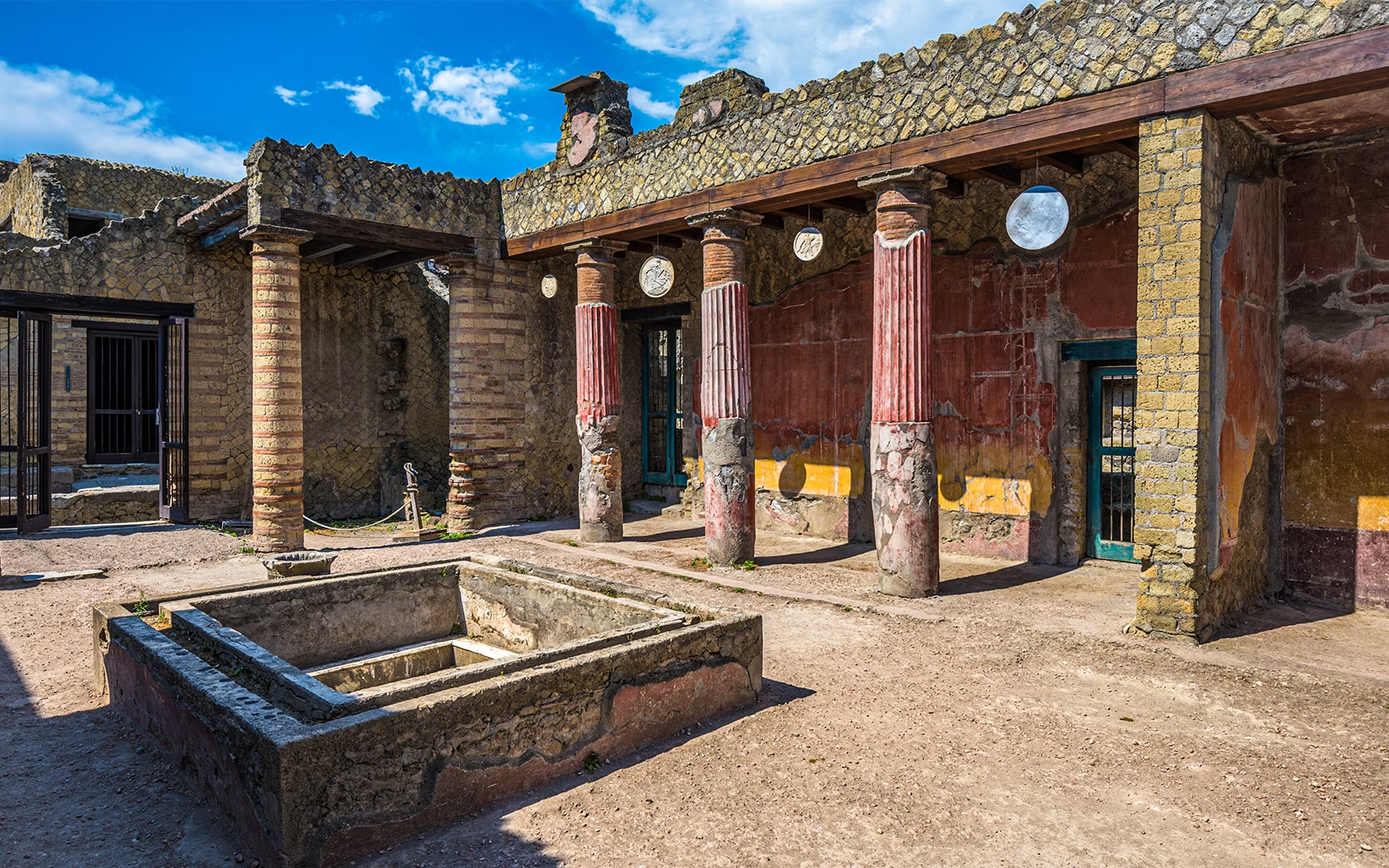
Pompeii was buried by falling pumice that crushed roofs. Herculaneum was struck by extremely hot pyroclastic surges that carbonised organic material rather than burning it, then sealed it under a compact mass. That's why beams, beds, a cradle, sliding doors and fishing nets still exist here.
The practical consequence: at Herculaneum you look at the objects of daily life; at Pompeii you look at the urban scale of a complete Roman city, with amphitheatre, forum and theatres.
What you see at Herculaneum
- House of the Deer, with its sculpture groups and view towards the ancient shoreline
- House of the Bicentenary and its Second Style frescoes
- Central and Suburban Baths, with changing rooms and floor mosaics
- The beachfront chambers where those fleeing took shelter
- House of Neptune and Amphitrite, with its glass-paste mosaic wall
What you see at Pompeii
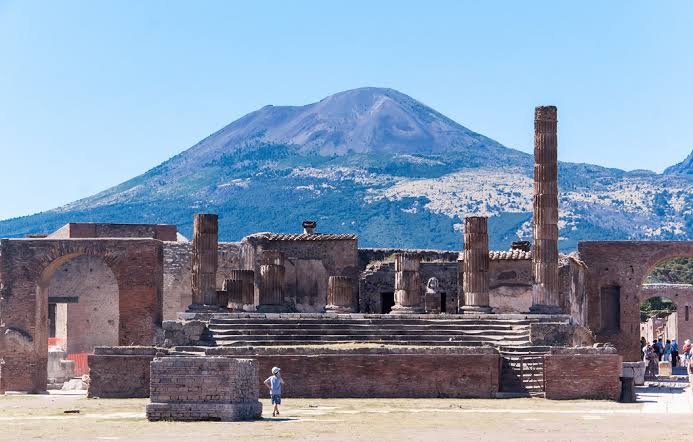
- The Forum with Vesuvius framed behind it — the site's defining shot
- The amphitheatre, the earliest known permanent Roman amphitheatre
- Villa of the Mysteries and its painted cycle
- Stabian Baths, the lupanar and the thermopolia along Via dell'Abbondanza
Choosing by how much time you have
| You have | Recommended choice |
|---|---|
| Half a day | Herculaneum: compact route, high density of things to see |
| A full day | Pompeii, or both with the train between them |
| Two days | Pompeii one day, Herculaneum plus Vesuvius the other |
| Travelling with children | Herculaneum: less walking, more recognisable objects |
| Peak summer heat | Herculaneum in the morning: more shade, shorter distances |
Frequently asked questions
Frequently asked questions
If I can only see one, which?
Herculaneum for a few hours or intact houses; Pompeii for the scale of a full Roman city.
Can I do both in a day?
Yes — they're 20 minutes apart by train. You need an early start, three hours at Pompeii and two at Herculaneum.
Which is better with children?
Herculaneum: short route, plenty of interiors and everyday objects they recognise.
Is Herculaneum less crowded?
Usually yes, though groups arrive here too between 10:00 and 13:00.
Is it the same ticket?
No, two separate parks with separate ticketing. Combined Vesuvian-sites tickets and reseller combos exist.
Go deeper
Updated 2026-08-04 · Official source